
Indian Minister of State for External Affairs E Ahamed on Tuesday met Bangladesh Foreign Minister M Morshed Khan to discuss bilateral and South Asian Association for Regional Cooperation matters.

Chinese Foreign Minister Wang Yi stated that President Xi Jinping and Prime Minister Narendra Modi reached a crucial consensus during the BRICS summit, agreeing that China and India should be partners, not rivals. The leaders pledged to maintain peace and tranquility in border areas, deepen cooperation, and support each other in multilateral forums, aiming to strengthen the Global South and promote a multipolar world order.

The United Arab Emirates (UAE) has expressed intent to invest an additional $25 billion in India, with an ultimate goal of reaching $100 billion in investments, Union Minister Piyush Goyal announced. This comes as both nations plan to enhance cooperation in shipping, ports, energy, and emerging technologies, against a backdrop of expanding bilateral trade.

In recent years, China and Russia have pushed for de-dollarisation within BRICS, which India has resisted. One reason is that India does not want to hurt its relationship with the United States, and another is the fear of China controlling trade because the renminbi is considered the strongest currency in the bloc today.

Prime Minister Narendra Modi hosted Iranian President Masoud Pezeshkian in New Delhi for talks focusing on the West Asia situation, bilateral relations, and BRICS cooperation. The meeting, Pezeshkian's first visit to India as president, comes amidst heightened tensions in West Asia due to new US sanctions on Iran and concerns over global oil supplies from the Strait of Hormuz. Both leaders emphasised regional stability and economic resilience.

New Zealand head coach Rob Walter has revealed plans to utilise explosive batter Finn Allen in a middle-order role during the upcoming ODI series against India.

The Indian men's cricket team is facing kit sizing issues and accommodation concerns ahead of their departure for the Asian Games. While most kit problems are being resolved, the BCCI has proactively arranged its own hotel for the team in Nagoya, Japan, due to reported delays and inadequate facilities for other athletes.

'It is a blunt and dangerous attempt to pressure India to sign BTA on one-sided terms.'

Finance Minister Nirmala Sitharaman stated that negotiations for the India-US trade agreement have reached a 'plateau', indicating limited scope for further concessions from either side, while also highlighting the US's aim to reduce its trade deficit with India.

Prime Minister Narendra Modi and Russian President Vladimir Putin held extensive discussions to strengthen bilateral trade, defence, and energy cooperation, while also addressing the ongoing Ukraine conflict and exploring avenues for peace and resolution, with Modi reiterating India's call for dialogue and diplomacy.

Iranian President Masoud Pezeshkian concluded his visit to India for the 18th BRICS Summit, announcing that Iran and the UAE agreed to move past previous tensions. This diplomatic breakthrough occurred during talks with Abu Dhabi's Crown Prince on the summit sidelines. Pezeshkian also met with PM Modi to discuss bilateral ties and West Asia developments, with Modi emphasising dialogue for regional peace. The BRICS summit adopted the New Delhi Declaration 2026, calling for global governance reforms and de-escalation in West Asia.

India's men's cricket team, despite being full strength, faces a rusty start and weather challenges in their Asian Games semifinal against a second-string Sri Lanka. Heavy rain has hampered their practice, and while the forecast for the semifinal is clear, the final could be affected. India, as top-ranked, will progress if the match is washed out, highlighting the impact of weather on the tournament.

In a major operational milestone, US fifth-generation F-35 stealth fighter jets are set to participate in joint combat drills alongside the Indian Air Force (IAF) for the first time during the upcoming multinational air exercise Tarang Shakti 2026.

India has significantly increased its diplomatic engagements with Bhutan, Nepal, Bangladesh and the Maldives.

India has stated its commitment to protecting its economic interests and ensuring energy security after the US House of Representatives passed a bill allowing the US President to impose tariffs of up to 100 per cent on countries, including India and China, for purchasing Russian crude oil. The Ministry of External Affairs affirmed India's resolve to maintain diversified energy sourcing and has articulated its concerns to US interlocutors regarding the bill's potential implications.

Chinese President Xi Jinping concluded his three-day visit to the US, stating that his discussions with President Donald Trump had injected "new substance" into the China-US relationship. Both leaders expressed optimism for future cooperation, with agreements reached on certain trade goods and discussions held on AI capabilities.

Russia remains India's biggest fertiliser supplier, with imports rising nearly 40 per cent in 2025.

'India should not trade away its energy security for temporary tariff relief. Neither signing a trade agreement nor stopping Russian oil purchases can protect it from future US action.'
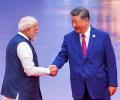
Ahead of Xi Jinping's visit, National Security Advisor Ajit Doval and Chinese Foreign Minister Wang Yi held extensive talks in Beijing on August 25 on the boundary issue and reached an eight-point consensus.

Senior Congress leader Shashi Tharoor has articulated India's position on BRICS, advocating for it to be a "non-West, but not anti-West" platform, a stance he believes is crucial for India's national interest. He highlighted the prestige of hosting the BRICS summit, India's responsibility to represent the Global South, and the significance of bilateral meetings, particularly with China and Russia. Tharoor also addressed the strained India-China relations, citing border issues and trade leverage, and discussed the challenges within BRICS, including difficulties in achieving consensus on global issues and trade imbalances, while also considering the need for diversified international relations amidst unpredictable US sanctions.

Who is running the show in Dhaka? This kind of flip-flop, culminating in a last-minute decision to skip a maiden visit, can happen only when the remote is in the hands of one of the competing lobbies within the BNP -- one that appears determined to play a game of chess with India.

India on Tuesday conveyed to China the importance of maintaining peace and tranquility along the Line of Actual Control (LAC) for overall bilateral ties as national security advisor Ajit Doval held talks with Chinese Foreign Minister Wang Yi focusing on delimitation of the frontier and sustaining work on trans-boundary cooperation.

One of the important topics of discussion between the two leaders is expected to be the Northern Sea Route and the Chennai-Vladivostok Maritime Corridor.

The Nepalese foreign minister was speaking to the media a day after holding wide-ranging talks with his Indian counterpart S Jaishankar that focused on ways to further expand ties in diverse sectors, including trade, critical technology, connectivity and energy.

External Affairs Minister S Jaishankar and his Iranian counterpart Abbas Araghchi held talks focusing on the West Asia crisis and its impact on energy supplies and maritime stability.

Prime Minister Narendra Modi's 76th birthday was marked by a flurry of greetings from global leaders, including Italian PM Giorgia Meloni, Israeli PM Benjamin Netanyahu, and Russian President Vladimir Putin, all underscoring strengthening bilateral ties and India's increasing stature on the world stage.

Ahead of President Vladimir Putin's visit to India for the BRICS summit, Russia has expressed support for New Delhi's peace initiatives to resolve the Ukraine conflict. Discussions between Putin and PM Modi will cover defence, energy, technology, and the repatriation of Indian nationals from the Russian military, alongside addressing trade and investment ties.
The meeting, held on the sidelines of the SAARC Foreign Ministers' conference, lasted for about half-an-hour.

National security advisor Ajit Doval arrived in Beijing on Monday for a two-day visit to take part in the Special Representatives talks on the India-China boundary question with his Chinese counterpart and Foreign Minister Wang Yi.

India's proposal to link BRICS payment systems, including central-bank digital currencies (CBDCs), was notably absent from the grouping's New Delhi Declaration, despite being a key agenda item for India's chairmanship. This omission leaves the 16-year effort for trade in local currencies without a settled payment architecture, with the declaration only 'acknowledging' the work of the BRICS Payment Task Force.

Iranian President Masoud Pezeshkian delivered a strong address at the UN General Assembly, rejecting US allegations against Iran and accusing Washington and Israel of aggression and terrorism. He criticised US sanctions, defended Iran's peaceful nuclear programme, and highlighted the Palestinian issue.

Chinese Foreign Minister Wang Yi is set to attend the BRICS National Security Advisors meeting in New Delhi on June 22-23. The high-level gathering will address international security challenges, regional issues, and prepare for the upcoming BRICS Summit in India. Wang Yi is also expected to hold bilateral talks with India's NSA Ajit Doval, focusing on India-China border issues.

India and China are in what experts call 'a cooperation-versus-competition situation'.

Bangladesh has stated there is "no rush" for Prime Minister Tarique Rahman's visit to India, emphasising that Dhaka will not compromise its national interests. State Minister Humaiun Kobir indicated the visit would occur after sufficient bilateral progress. The visit is crucial for mending India-Bangladesh ties, which have been strained, particularly following the ouster of former PM Sheikh Hasina and Bangladesh's subsequent extradition request.

Nepal's Hindu groups have sought an all-party discussion on restoring Hindu-nation status within three months.

'If you listen to a rowdy in a class, he will keep on bullying you.' 'India can say do whatever you want. We will not compromise on anything.'

Prime Minister Narendra Modi met Iranian President Masoud Pezeshkian at the SCO summit, advocating for dialogue and diplomacy to resolve the West Asia conflict and expressing India's desire to expand and diversify trade with Iran. Pezeshkian, in turn, urged India to leverage its contacts to promote peace.

Pakistan's Defence Minister Khawaja Asif has issued a stern warning that the Makkah Defence Alliance, a newly formed pact between Pakistan, Saudi Arabia, and Turkiye, stands ready to activate its collective defence provisions in response to escalating Houthi attacks on Saudi Arabia.

Prime Minister Narendra Modi urged Russian President Vladimir Putin to move from 'endless war to the end of war' in Ukraine, emphasising that a peaceful resolution is humanity's shared priority.

'After announcing that she will return to Bangladesh, if she does not, her credibility will suffer.'
